Baseball is a sport filled with statistics that help measure player performance. Among these statistics, Earned Run Average (ERA) is one of the most important metrics used to evaluate pitchers. Calculating ERA manually can sometimes be confusing, especially for beginners or those unfamiliar with baseball statistics. This is where an ERA Calculator becomes extremely helpful.
An ERA calculator allows players, coaches, analysts, and fans to quickly determine a pitcher’s earned run average without performing complicated calculations. By entering a few basic numbers, the calculator instantly provides an accurate ERA value that reflects the pitcher’s effectiveness.
In this guide, we will explore what an ERA calculator is, how it works, the formula behind ERA, and why this statistic plays a crucial role in baseball analysis.
What Is an ERA Calculator?
An ERA calculator is an online tool designed to calculate a pitcher’s Earned Run Average quickly and accurately. It uses a standard mathematical formula to determine how many earned runs a pitcher allows per nine innings pitched.
In baseball, ERA is one of the most commonly used statistics for evaluating pitchers. It helps determine how effective a pitcher is at preventing runs. Instead of manually applying the formula each time, an ERA calculator simplifies the process by doing the calculations instantly.
This tool is particularly useful for players, coaches, and analysts who regularly track pitching performance. It saves time, reduces the chances of mathematical errors, and provides immediate results for better decision-making.
What Does ERA Mean in Baseball?
ERA stands for Earned Run Average, which measures the average number of earned runs a pitcher allows over nine innings. Since a standard baseball game consists of nine innings, ERA provides a normalized way to compare pitchers regardless of how many innings they pitch.
An earned run is a run scored by the opposing team that is directly attributed to the pitcher’s performance without the influence of fielding errors. If a run occurs due to a defensive mistake, it is considered an unearned run and does not count toward ERA.
ERA is widely used because it reflects a pitcher’s ability to prevent scoring opportunities. A lower ERA indicates a stronger pitcher who allows fewer runs, while a higher ERA suggests the pitcher struggles to control opposing hitters.
Because of its importance, ERA is tracked across all levels of baseball, from youth leagues to professional competitions.
How an ERA Calculator Works
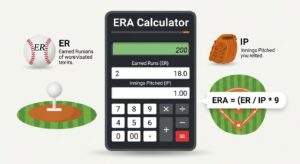
An ERA calculator simplifies the process of calculating earned run average by applying the official baseball formula automatically. The user only needs to input two basic statistics, and the calculator does the rest.

Inputs Required for the ERA Calculation
To accurately calculate ERA, you need a few essential statistics from the pitcher’s performance. These inputs ensure the result reflects true pitching effectiveness.
Earned Runs Allowed
This is the total number of earned runs a pitcher has given up during a game or over a season. Only runs directly attributed to the pitcher’s performance are counted.
Innings Pitched
Innings pitched represent the total number of innings a pitcher has completed, including partial innings. This figure is critical for calculating the average runs allowed per nine innings.
Standard Nine Innings
ERA is always calculated based on a standard nine-inning game. Using nine innings ensures consistency and allows fair comparison between different pitchers.
Once these values are entered into the calculator, it instantly computes the ERA, providing an accurate reflection of pitching performance.
ERA Formula Explained
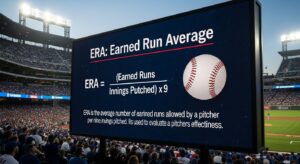
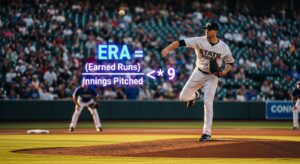
The official formula used to calculate ERA is:
ERA = (Earned Runs × 9) ÷ Innings Pitched
This formula multiplies the number of earned runs by nine and then divides it by the number of innings pitched. The result represents the average number of runs a pitcher allows per nine innings.
The multiplication by nine ensures that the statistic reflects performance over a full game length, even if the pitcher has thrown fewer innings.
Example of ERA Calculation
Let’s consider a simple example.
If a pitcher allows 4 earned runs over 6 innings pitched, the ERA would be calculated as:
ERA = (4 × 9) ÷ 6
ERA = 36 ÷ 6
ERA = 6.00
This means the pitcher would allow an average of six earned runs per nine innings.
Using an ERA calculator eliminates the need to perform this calculation manually.
ERA Formula in Baseball
The ERA formula has remained consistent throughout baseball history and is used across major leagues, minor leagues, and amateur competitions. Its simplicity makes it easy to apply while still providing meaningful insights into pitching performance.
The formula focuses only on earned runs, which ensures that pitchers are not unfairly penalized for defensive mistakes made by teammates. This makes ERA a fairer representation of individual pitching ability.
However, the formula also has some limitations. Because it depends on team defense and game conditions, ERA may not always provide a complete picture of a pitcher’s performance. Despite this, it remains one of the most trusted pitching metrics in the sport.
Step-by-Step Guide to Using an ERA Calculator
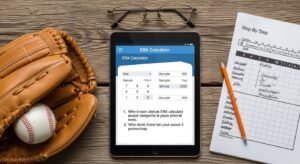
Using an ERA calculator is simple and requires only a few steps. Most online calculators follow a similar process.
Step 1: Enter Earned Runs
Start by inputting the total number of earned runs the pitcher has allowed in the game or season. This is the primary statistic used to calculate ERA accurately.
Step 2: Enter Innings Pitched
Next, provide the total number of innings the pitcher has completed, including partial innings. This ensures the calculation reflects the pitcher’s actual workload.
Step 3: Click Calculate
After entering the required values, click the calculate button. The tool automatically applies the ERA formula and generates the result instantly.
Step 4: View the Result
The calculator displays the pitcher’s ERA immediately on the screen. Users can quickly interpret the number to assess pitching performance.
This simple process allows players, coaches, and analysts to evaluate performance efficiently without spending time on manual calculations.
Example ERA Calculations
Understanding ERA becomes easier when you look at a few real examples.
Example 1 – Basic ERA Calculation
Suppose a pitcher allows 2 earned runs in 9 innings.
ERA = (2 × 9) ÷ 9
ERA = 2.00
This indicates an excellent pitching performance.
Example 2 – Partial Innings Pitched
A pitcher allows 3 earned runs in 5 innings.
ERA = (3 × 9) ÷ 5
ERA = 5.40
This shows a higher ERA because the pitcher allowed more runs in fewer innings.
Example 3 – Season-Long Performance
If a pitcher allows 45 earned runs in 150 innings:
ERA = (45 × 9) ÷ 150
ERA = 2.70
This would be considered a strong ERA for many professional pitchers.
Why ERA Is Important in Baseball Statistics
ERA is one of the most widely recognized pitching statistics in baseball. It provides valuable insight into a pitcher’s ability to limit scoring opportunities.
Coaches often use ERA to evaluate players and make decisions about pitching rotations. A pitcher with a lower ERA is generally considered more reliable in preventing runs.
Scouts and analysts also rely on ERA when comparing players across different teams or leagues. Since ERA standardizes performance over nine innings, it allows fair comparisons regardless of playing time.
Fans and fantasy baseball players frequently track ERA as well. It helps them understand which pitchers are performing well and which ones may be struggling.

What Is a Good ERA in Baseball?
The definition of a “good” ERA depends on the level of competition and the era of baseball being played.

Average ERA in Professional Baseball
In many professional leagues, the league average ERA typically falls between 3.50 and 4.50.
Excellent vs Poor ERA Values
- Below 2.50 – Elite pitching performance
- 2.50 – 3.50 – Very strong pitcher
- 3.50 – 4.50 – Average performance
- Above 5.00 – Below average pitching
ERA Differences Across Baseball Levels
ERA expectations vary depending on the level of play.
Youth Baseball
In youth baseball, pitchers are still developing their skills and consistency. As a result, their ERAs are often higher compared to older or more experienced players.
College Baseball
College-level pitchers typically have better training and refined techniques. This leads to more controlled performances and generally lower ERAs than in youth leagues.
Professional Leagues
Professional pitchers possess advanced skills and experience, making even small ERA differences significant. Accurate ERA tracking is crucial for evaluating performance and comparing players at this level.
Factors That Affect a Pitcher’s ERA
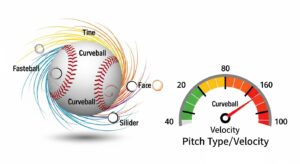
Although ERA measures pitching effectiveness, several external factors can influence the statistic.
Team Defense
A pitcher’s ERA can be influenced by the quality of their team’s defense. Strong defensive players can make key plays that prevent hits and reduce the number of runs scored.
Ballpark Conditions
The design and dimensions of a ballpark can affect a pitcher’s ERA. Smaller fields or hitter-friendly environments often lead to more runs being allowed.
Quality of Opponents
The strength of opposing hitters directly impacts a pitcher’s performance. Facing skilled or power hitters can result in more earned runs and a higher ERA.
Pitching Workload
Pitchers who throw many innings or experience fatigue may allow more runs. Long pitching sessions can increase mistakes and contribute to a higher ERA.
These factors show why ERA should not be considered in isolation and is best analyzed alongside other pitching statistics.
ERA vs Other Baseball Pitching Statistics
While ERA is extremely popular, analysts often use additional metrics to gain deeper insights into pitching performance.

ERA vs WHIP
WHIP (Walks plus Hits per Inning Pitched) measures how many baserunners a pitcher allows. While ERA focuses on runs allowed, WHIP evaluates overall control and effectiveness.
ERA vs FIP
Fielding Independent Pitching (FIP) attempts to measure a pitcher’s performance without considering defensive support. It focuses on outcomes the pitcher can directly control.
ERA vs Pitching Average
Pitching average typically measures hits allowed rather than runs scored. ERA is considered more meaningful because it reflects actual scoring outcomes.
Benefits of Using an Online ERA Calculator
An online ERA calculator offers several advantages compared to manual calculations.

Fast Results
The ERA calculator provides instant results after entering earned runs and innings pitched. This saves time and eliminates the need for manual calculations during games or analysis.
Improved Accuracy
Automated calculations ensure the ERA result is precise and reliable every time. By removing manual math, the tool significantly reduces the chances of calculation mistakes.
Convenient Access
An online ERA calculator can be used anytime on computers, tablets, or mobile devices. This makes it easy for players, coaches, and fans to calculate ERA from anywhere.
Performance Tracking
Using an ERA calculator regularly helps track a pitcher’s performance across games or entire seasons. It allows users to monitor improvements and analyze pitching consistency over time.
Because of these advantages, ERA calculators are widely used by both amateur and professional baseball communities.
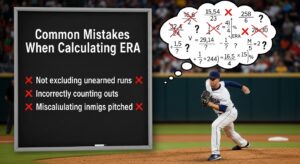
Common Mistakes When Calculating ERA
Even though the ERA formula is simple, mistakes can still occur during manual calculations.
One common error is incorrectly converting partial innings pitched. Baseball innings are recorded differently from standard decimal values, which can lead to confusion.
Another mistake is including unearned runs in the calculation. Since ERA only counts earned runs, adding unearned runs will produce an inaccurate result.
Some people also forget to multiply by nine when using the formula, which results in incorrect ERA values.
Using an ERA calculator helps avoid these errors and ensures reliable results.
Who Should Use an ERA Calculator?
An ERA calculator can benefit a wide range of baseball enthusiasts.
Players can track their pitching performance and monitor improvement throughout the season.
Coaches can analyze pitchers and make informed decisions about game strategy.
Sports Analysts can use ERA data when studying player statistics and trends.
Fantasy Baseball Players can evaluate pitchers when building competitive fantasy teams.
Because ERA is such a fundamental baseball statistic, this calculator is valuable for anyone interested in pitching analysis.

FAQs About ERA Calculators
1. What is an ERA calculator used for?
An ERA calculator is used to quickly determine a pitcher’s Earned Run Average based on earned runs allowed and innings pitched. It helps players and coaches evaluate pitching performance accurately.
2. How do you calculate ERA in baseball?
ERA is calculated using the formula: (Earned Runs × 9) ÷ Innings Pitched. This formula shows the average number of earned runs a pitcher allows in a standard nine-inning game.
3. What is considered a good ERA for a pitcher?
A good ERA usually falls below 3.50 in professional baseball, showing strong pitching performance. Elite pitchers often maintain ERAs under 2.50 over a season.
4. Do unearned runs count in ERA calculations?
No, unearned runs are not included when calculating ERA because they result from defensive errors. ERA only measures runs that are directly attributed to the pitcher’s performance.
5. Why should players use an online ERA calculator?
An online ERA calculator saves time by instantly performing the calculation without manual math. It also reduces the chances of mistakes and provides quick, reliable results.
Conclusion
An ERA Calculator is a valuable tool for anyone interested in baseball statistics. By simplifying the process of calculating earned run average, it allows players, coaches, and fans to evaluate pitching performance quickly and accurately.
ERA remains one of the most important metrics in baseball because it measures a pitcher’s ability to prevent runs over a standard nine-inning game. While it may not capture every aspect of pitching performance, it provides a clear and widely accepted benchmark for comparison.
Whether you are tracking your own pitching stats, analyzing professional players, or simply learning more about baseball analytics, using an ERA calculator can make understanding this essential statistic much easier.